Color
How to Choose Paint Colors for Your Home
Choosing paint colors doesn't have to be overwhelming. Here's how to approach color selection for a cohesive, lasting result.
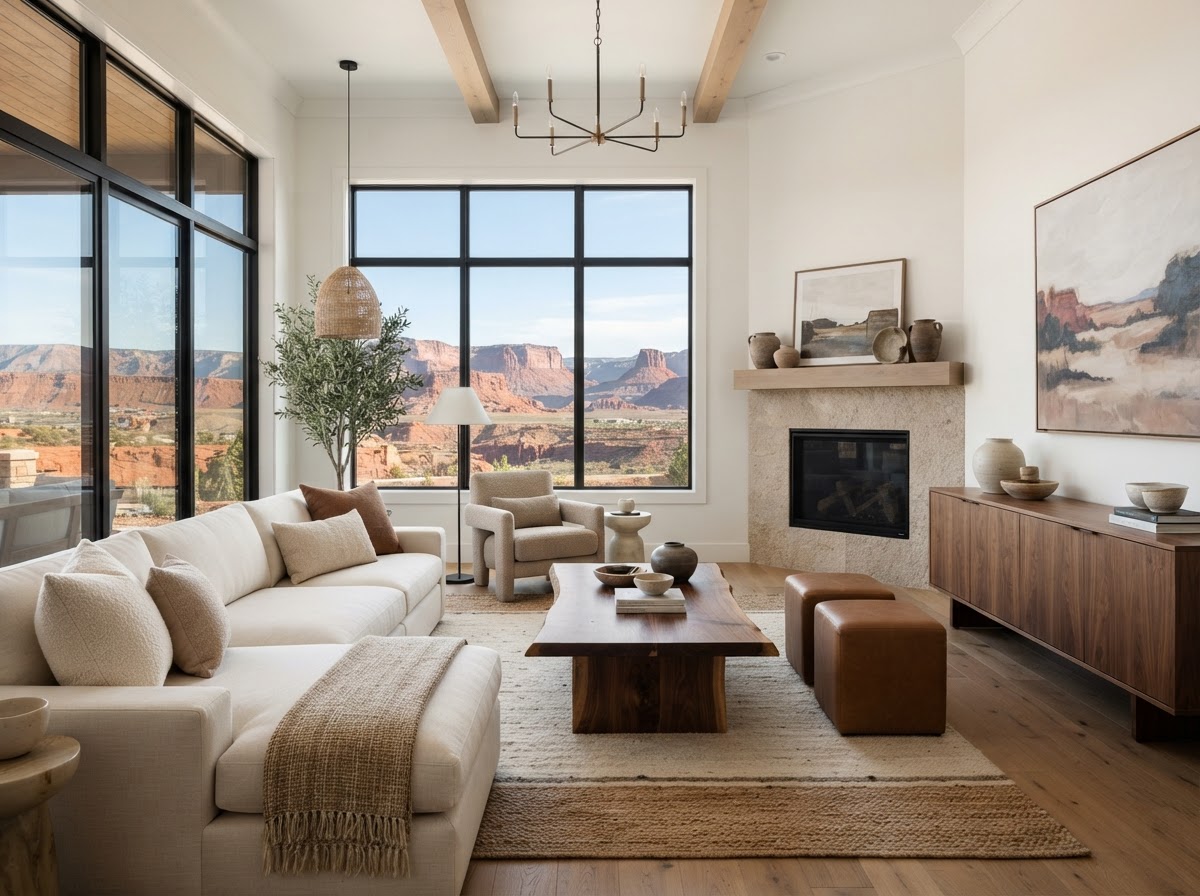
Choosing paint colors is the part of a painting project that most homeowners find stressful, but a few principles make it manageable. The goal is a cohesive palette that works with your home's lighting, furnishings, and setting — not a single perfect color chosen in isolation.
Start with lighting. Paint color changes dramatically under different light. Southern Utah homes get strong natural light, especially through large windows, and that light is warm. A color that looks right in a paint store under fluorescent light may look completely different on your wall at noon. Always test colors on the actual wall, in the actual room, and look at them at different times of day.
Consider undertones. Most paint colors have an undertone — a warm (yellow, red, orange) or cool (blue, green) base that shows up next to other colors. A 'neutral' gray can have a blue or green undertone that clashes with warm wood trim. Matching undertones across a palette keeps the home feeling cohesive rather than disjointed.
Think about flow between rooms. In an open floor plan, colors visible from one space should relate to colors in the next. That doesn't mean every room is the same color — but a palette of two or three coordinating colors, with trim and ceilings consistent throughout, creates a sense of intention. Accent walls can add a bolder color without committing an entire room to it.
For exteriors in Southern Utah, the setting matters. Warm neutrals, soft earth tones, and muted accents complement the desert landscape and red rock. Bright, cool colors can look out of place. Consider the fixed elements — roof color, stonework, hardscape — and choose a body color that relates to them.
Finally, sample before committing. Paint a large section of the wall, live with it for a few days, and look at it in morning, midday, and evening light. The cost of a few sample cans is small compared to the cost of repainting a color that doesn't work.
Frequently Asked Questions
How do I test paint colors on my wall?
Paint a two-foot square section on two different walls — one that gets direct sun and one that's shaded. Look at it at different times of day and next to your trim, flooring, and furnishings before deciding.
Should all the rooms in my house be the same color?
Not necessarily, but the colors should relate. A palette of two or three coordinating colors, with consistent trim and ceilings throughout, creates flow without every room looking identical.
